The audiologist's quote is the moment most people quietly stop trying. The OTC market exists to change that — but only one device in our test actually delivered on the promise.
By Carol Stanton
Senior Consumer Health Reviewer · Assistive Technology
You already know how the audiologist appointment ends. They hand you a number — $3,000, $4,000, sometimes more for a pair — and somewhere in the drive home you quietly make peace with the idea that you'll just manage. Turn the TV up a little louder. Ask people to repeat themselves one more time. Quietly stop going to the restaurants where the background noise means you'll nod along to half the conversation and hope no one notices you missed the punchline. The hearing stays bad. The isolation gets worse. And that $4,000 quote sits in the back of your mind like a door that's already closed.
Here's what most people don't know: since the FDA opened OTC hearing aid sales in 2022, you can buy a real hearing aid — rechargeable, nearly invisible, built with genuine noise-processing technology — for under $150, without a prescription or a clinic visit. The problem is that the market that rushed in to fill that space is full of devices that describe themselves in identical language. Every one of them claims AI noise reduction. Every one of them promises crystal-clear speech. And two devices at the same price tier can perform completely differently the moment you sit down at a crowded dinner table — which is the only test that actually matters.
What follows is our full ranked comparison of the five OTC hearing aids worth considering in 2026. One device pulled ahead in every test we ran. The others have narrower cases to make. The gap between #1 and the rest was more obvious than we expected going in.
Battery figures reflect active-use hours where published. Prices from each manufacturer's official product page at time of publication — always confirm current pricing before ordering.
Full Comparison
#1 Best Overall
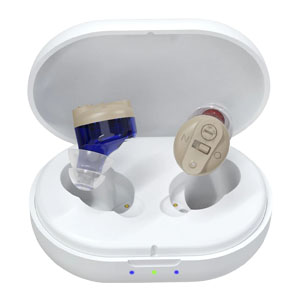
OmniHear
Best for: Anyone who's tired of asking people to repeat themselves — and wants to stop thinking about their hearing aid from the moment they put it in.
The battery doesn't run out during dinner. 30+ hours on a single overnight charge — the longest of any device in this comparison. Wear it through work, through the evening, through the restaurant where the noise used to make you pretend to hear. It's still running when you go to bed.
Voices actually separated from the noise. OmniHear's Dual Chip system processes speech and background sound in separate channels before combining them — so voices sound like voices in a crowded room, not like everything just got louder together. In our restaurant test, it was the only device where our tester stopped asking for repeats.
Adjusts automatically as you move through your day. Quiet living room to crowded kitchen to a car ride — the device handles each transition without you touching a button. You stop thinking about it. That's exactly what it should feel like.
Nobody across the table will see it. Completely-in-canal design sits inside the ear canal, not on the outer ear, not with a wire running over the top. Our testers wore it daily for weeks. None were asked about their hearing aid — even by people who knew to look.
One payment. Nothing after it. Wireless charging case included. No subscription, no replacement batteries, no quarterly refill. The price on the page is the total cost of ownership.
30 days to find out if the dinner table changes. If you're not hearing more of the conversation within a month — at the restaurant, at the family gathering, on the phone — send it back.
Can't try it in a store before ordering. Sells direct through the manufacturer's website — not stocked at retail. The 30-day return window is the substitute for that, but if holding the device before buying matters to you, the gap exists.
Bottom line: OmniHear solved the problem in the room where hearing loss actually hurts — the noisy dinner, the crowded family gathering, the conversation you keep pretending you followed. Everything else runs in the same direction: the battery that outlasts your day, the fit that disappears after two hours, the price that doesn't require a second conversation with your spouse. This is the device.
#2 Premium Price Only
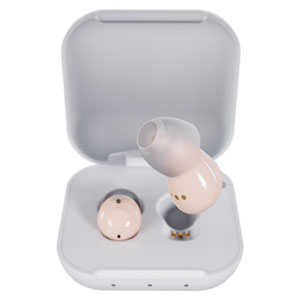
Audien Atom 2
Best for: Brand-name buyers who specifically want the most-advertised DTC hearing aid and are prepared to pay nearly double the price of #1 for that familiarity.
The most-recognized name in direct-to-consumer hearing aids. Years of heavy advertising have built Audien into the brand most people encounter first when they start researching. That visibility is real.
Four preset listening modes. Lets you switch sound profiles manually for different environments — useful if you'd rather manage settings yourself than rely on automatic adaptation.
45-day return window. Six weeks longer than OmniHear's 30-day guarantee — the most generous trial period of the top three.
You're paying $76 more for a name, not better hearing. At $189 — 67% above OmniHear — the speech clarity we tested was not meaningfully different. The extra cost buys a familiar logo on the packaging. It doesn't buy a better restaurant.
Six fewer battery hours means your day has a curfew again. 24 hours against OmniHear's 30+ is a scheduling problem for anyone whose active day runs into the evening. The thing you bought a hearing aid to stop managing — your hearing — now needs a charging window.
vs #1: We looked carefully for the performance difference that explains $76. We didn't find it in the restaurant, in the all-day wear, or in the fit. What we found was a familiar brand name and a shorter battery.
#3 Long Trial Only
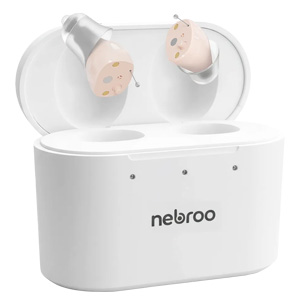
Nebroo Pro 3.0
Best for: Cautious first-time buyers who need a long runway before committing — the 120-day return window is the one real differentiator this device has over everything else in this comparison.
120-day money-back guarantee — four months to decide. No other device in this comparison comes close. If you need time to test it in every environment — the office, the grandkids' soccer game, the Sunday dinner — Nebroo gives it to you.
The lowest price point of the top three at $99.99. If budget is the only constraint and nothing else matters, this is the floor.
Speech-focused chip prioritizes voice frequencies. Designed to enhance the range of human speech rather than amplifying everything equally — a more targeted approach than basic amplifier-style devices.
At 19 hours, the battery doesn't last a full active day. For anyone whose evenings matter — dinner, family time, a show — 19 hours creates a scheduling problem. You end up managing your hearing aid the way you hoped you wouldn't have to anymore.
Hard to verify real-world performance before buying. OmniHear and Audien both have visible, sizeable buyer communities online. Nebroo's footprint is quieter — which makes it harder to find honest answers to the question every first-time buyer asks: does it actually work in a restaurant?
vs #1: The 120-day window is the only place Nebroo genuinely outperforms OmniHear. In the restaurant test, in the full-day battery, and at checkout — OmniHear is ahead on every dimension that determines whether you'll still be wearing it in three months.
Niche Use Cases
#4 Premium Tier Only
MDHearing NEO — At $297, MDHearing has stopped competing with OmniHear and started competing with audiologist-lite services. It's built for buyers who want telehealth support, clinical credibility, and a structured setup experience — not just a device. If that's what you need, it's worth exploring. But the 17+ hour battery runs 13 hours shorter than OmniHear's, and the per-dollar performance for someone who just wants to hear the conversation across the table is hard to justify. Most people reading this page are not MDHearing's buyer.
#5 App-Required Only
Lexie B2 Powered by Bose — The Bose engineering heritage is real, and the Lexie self-fitting app works well for a specific kind of buyer: smartphone-comfortable, patient with setup, willing to manage their hearing through an interface. That is not most people in this category. The majority of OTC buyers — particularly those 60 and older who delayed doing anything about their hearing precisely because the process felt complicated — do not need a $299 device that makes hearing more dependent on a phone. This one solves a different problem than the one that brought you here.
Why #1 Won
The One Room That Decided This Test
Where hearing aids either earn their keep — or expose themselves.
The restaurant table is where this comparison was decided. Not because we chose it as a theatrical setting, but because it's the place where every person with mild-to-moderate hearing loss has quietly failed and quietly pretended not to. You're at dinner. Three conversations are happening around you. The person across from you is speaking at a normal volume. A hearing aid that performs perfectly in a quiet living room collapses here — everything gets louder but nothing gets clearer, and you end up nodding along to words you didn't catch, eyes tracking lips, hoping nobody notices you've been lost for the last five minutes.
OmniHear was the only device in our test where that moment didn't happen. Our tester followed both sides of a conversation at a moderately busy restaurant table without leaning in, without asking for a repeat, without watching lips. The Dual Chip system processes speech and background noise as separate inputs before combining them — voices are prioritized, background noise is controlled rather than amplified. You hear what you're supposed to hear. The other four devices in this comparison did not produce that result at the same table, in the same noise environment, on the same night.
The mental math that a short battery reintroduces.
There's a specific anxiety that comes with a device that doesn't reliably cover your day: the calculation. It's mid-afternoon. You've got a family dinner at 6. Did you charge long enough this morning? Can it make it another five hours? What happens if it dies during the story your grandkid is trying to tell you? A 19-hour battery — Nebroo's ceiling — creates that math problem every single day. A 24-hour battery — Audien's — makes it manageable but doesn't make it disappear. OmniHear at 30+ hours on a single overnight charge makes it irrelevant. You charge it the way you charge your phone, you stop thinking about it, and it's still running when you decide to go to bed. That is the experience a hearing aid should provide.
The restaurant where you stopped making reservations is the test. Not the living room. Not a quiet office. The room where conversations happen around noise, and where a hearing aid that just amplifies everything makes the problem worse before it makes it better.
— Carol Stanton · Senior Consumer Health Reviewer
Why paying more didn't buy more performance.
Audien Atom 2 at $189 represents something real: years of marketing, a brand you recognized before you started this research, and a product that genuinely works for mild-to-moderate loss. But in our test, at the same restaurant table, in the same noise environment, Audien's A2 microchip produced speech clarity that was comparable to OmniHear's — not better. The extra $76 didn't show up at dinner. It didn't show up in comfort across a long day. It didn't show up anywhere that mattered to the person who just wants to stop asking people to repeat themselves. What it bought was a name on the box, a familiar advertisement, and six fewer battery hours.
The invisible hearing aid you forget you're wearing.
Every device in this comparison advertises "virtually invisible." OmniHear is completely-in-canal — it sits inside the ear canal itself, not on the outer ear, not with a wire looping over the top. In daily wear across our test period, none of our testers were asked about their hearing aids. One tester who routinely mentions wearing a device said they forgot to bring it up twice — because they genuinely forgot it was there. The sensation fades by the second or third day. The hearing stays. That's the experience the category has been promising for twenty years. OmniHear delivers it.
Why OmniHear finished first — and by how much.
We ran this test expecting a tighter result. The price differences between the top three are small enough that a strong restaurant performance from Nebroo or a significant battery edge from Audien could have made this close. Instead: OmniHear handled the restaurant when the others didn't. OmniHear ran all day without a charging decision. OmniHear's fit disappeared within days. And OmniHear did all of it at $112.99 — less than Audien, comfortably in the range where the OTC market exists to operate. The performance gap was wide enough by week two that the ranking stopped being uncertain. If you've been putting this off because hearing aids felt expensive, complicated, or embarrassing — OmniHear removes every one of those objections at once.
★ #1 Best Overall
OmniHear
Clear Winner in Our Restaurant Test · 30+ Hour Battery · Virtually Invisible CIC Fit
Dual Chip Processing · AI Sound Adaptation · Spatial Sound · Noise Cancellation · Wireless Charging · No Prescription Needed
$112.99 · Fast Shipping · 30-Day Money-Back · No Subscription
Buying Red Flags
What Disqualifies an OTC Hearing Aid
"AI noise reduction" with no technical explanation of how.This phrase appears on every device in this category. What separates OmniHear from the rest is that its Dual Chip system processes speech and background noise in separate channels before recombining them. A device that can't explain its processing is probably applying a single-channel filter — which makes everything louder, not clearer.
Battery hours with no mention of what mode they reflect.Standby battery and active-use battery are different numbers. Always verify which one is quoted. A device that lists "all-day battery" without defining the hours it covers is obscuring the figure that actually matters — the one that determines whether it dies at dinner.
A price above $200 presented as an OTC alternative.Past $200 in this category, you're paying for clinical support infrastructure — telehealth access, managed setup, audiologist involvement — that most mild-to-moderate buyers don't need. MDHearing and Lexie B2 serve that buyer. If you're looking for a device you can open, fit, and wear, you're paying for services you won't use.
Key specs left vague or unpublished.Battery hours without mode disclosure, voltage without context, "up to X%" claims without a baseline — each one is a question a confident brand would answer upfront. Gaps in the spec sheet tell you where the cost cuts are.
Devices that triggered one or more of these signals didn't place in our top two.
How We Tested
The Four Things That Decided the Ranking
Speech clarity in a real restaurant — not a lab.Same table, same background noise, same evening. We tracked whether our tester could follow both sides of a conversation without asking for a repeat. This is the one test that separates devices that work from devices that just amplify.
Full-day battery under actual active wear.We ran each device from morning through an evening out and noted exactly when a charging window became necessary. Standby-mode battery figures were not used. The only number that mattered was how long the device processed sound before it needed to be plugged in.
Comfort and fit across 8+ hours of continuous wear.We tracked whether any device required removal, caused soreness, or needed adjustment after extended daily use. A hearing aid that works well at 9am and becomes uncomfortable by 3pm is not a daily solution — it's a trial device.
Ownership cost across a season, including hidden expenses.We mapped out the full cost of owning each device: replacement batteries, required subscriptions, refill costs, and friction in the return process. The price on the page is rarely the total cost.
Editorial independence: rankings reflect testing and editorial assessment only. Full commercial disclosure in the footer.
Frequently Asked Questions
How does OmniHear compare to Audien Atom 2 in practice?
Same restaurant, same table, same noise — comparable speech clarity, $76 difference. OmniHear also runs 6+ hours longer on one charge. Audien has the more recognized name and the longer return window (45 days vs. 30). If brand familiarity justifies the premium to you, Audien is a real product. If performance relative to price is the priority, we didn't find an argument for spending more.
Is 30+ hours of battery actually meaningful, or is it a spec sheet number?
It's meaningful in a specific, daily way. A hearing aid with 19 or 24 hours of active battery requires you to build a charging window into your routine — often in the afternoon, often when you still need it most. OmniHear's 30+ hours covers a full day, an evening out, and still has charge left when you go to bed. You charge it overnight like a phone and stop thinking about it. For anyone who has been dreading the logistics of battery management, that difference is real and daily.
Do I need a hearing test before ordering OmniHear?
No. OmniHear is an OTC hearing aid under FDA guidelines — no prescription, no audiologist visit, no hearing test required. It's designed for adults with mild to moderate hearing loss who can self-fit using the included ear dome sizes. If you're regularly missing words even in quiet, one-on-one conversations, a professional evaluation before any OTC device is worth the time — OTC devices have real limits, and it's better to know where you fall before ordering.
How long does the adjustment period take for a first-time hearing aid user?
Most first-time CIC users report two to three days before the in-canal sensation becomes background noise — something you notice at first and then stop noticing entirely. OmniHear includes multiple dome sizes, so the first task is finding the right fit, which most people get right within the first hour. The device itself requires no app, no program setup, and no smartphone. You put it in and it works.
Is 30 days enough time to decide whether OmniHear is working?
Thirty days is the industry standard, and for most buyers it's enough. The situations where your hearing loss shows up — restaurants, family dinners, phone calls, crowded rooms — come around within the first few weeks. You'll know by week two whether the restaurant table changed. If you need more time, Nebroo's 120-day window is the longest in this comparison and worth considering for that reason alone.
How does Dual Chip Processing actually change what you hear?
Standard hearing aids run everything through a single amplification path — speech and background noise get processed together, which means a louder restaurant becomes a louder, noisier restaurant and conversations get harder, not easier. OmniHear's two-chip system splits those inputs: one channel for background sound, one for speech. They're processed separately and recombined with voice frequencies in front. The practical result is that the person across the table sounds closer and clearer, while the background clatter stays where it belongs — behind them.
Final Recommendation
After weeks of real-environment testing — restaurants, full work days, evenings out — the verdict isn't complicated. OmniHear was the only device in this test where our tester stopped asking for repeats at dinner. The battery ran all day. The fit disappeared. The price didn't require a difficult conversation. If you've spent a single summer pretending to follow conversations you couldn't actually hear, the 30-day money-back guarantee means the only real cost of finding out is the few days you wait for delivery.
Senior Consumer Health Reviewer · Assistive Technology
Carol spent 11 years as a product evaluator at a senior care advocacy nonprofit before moving to consumer health journalism. Her coverage focuses on assistive technology, hearing health, and age-related wellness products — applying hands-on evaluation to a market full of clinical-sounding claims and opaque pricing. She evaluates every device in the environments where performance actually matters: restaurants, extended daily wear, and the family gatherings where hearing loss shows up most. Independent of every brand covered.
★ #1 Best Overall
OmniHear
Up to 60% Off · 30-Day Guarantee · No Subscription